


Signs You Need a Sports Chiropractor After an Injury
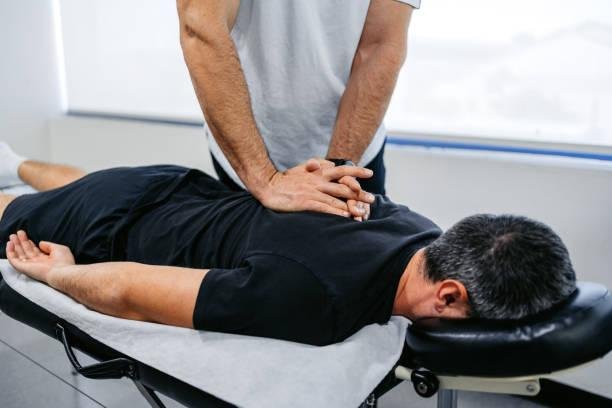
You rolled your ankle three weeks ago. Or maybe your shoulder's been nagging you since that last game. You've iced it, rested it, maybe even taped it up and played through it. But something still feels off. That's the moment most athletes get stuck, because there's no obvious line between "give it more time" and "this needs actual help." If you've been going back and forth on that question, this article is for you. Seeing a Sports Chiropractor near Rockville Centre NY might be the step that finally gets you moving right again, and the signs that point to that decision are more specific than you'd think.
What a Sports Chiropractor Actually Does
A sports chiropractor isn't just someone who cracks your back and sends you home. They focus specifically on how your body moves, loads, and performs under athletic demand. That's a different lens than a general chiropractor or a primary care doctor uses. Most general practitioners are looking for what's wrong. A sports chiropractor is also looking at why it went wrong and what's going to break next if you don't fix the pattern.
They work with the musculoskeletal system in the context of sport. So if you're a runner with knee pain, they're not just treating the knee. They're looking at your hip mechanics, your foot strike, your glute activation. The injury is often just where things fell apart, not where the problem actually started. That's a big difference in how treatment gets planned.
They also tend to use a mix of spinal adjustments, soft tissue work, joint mobilization, and movement retraining. Not one-size-fits-all. The approach gets built around what you do and what you need to get back to doing.
Warning Signs Your Injury Isn't Healing on Its Own
Rest is real medicine. But it has limits. Here are the signs that rest alone isn't cutting it anymore.
-
Stiffness that doesn't loosen up. If a joint is still stiff after a full warm-up, that's not normal soreness. That's a sign of something that needs hands-on attention.
-
Pain during specific movements. Not general soreness after a workout, but sharp or achy pain that shows up consistently during one particular motion. That pattern matters.
-
You're compensating without realizing it. Limping a little? Favoring one side? Your body is smart enough to route around pain, but that rerouting causes new problems fast.
-
Range of motion that keeps shrinking. If you can do less now than you could two weeks ago, that's the wrong direction.
-
The injury keeps coming back. Same spot, same pain, over and over. That's not bad luck. That's an unresolved mechanical issue.
Any one of those is a reason to get checked. Two or more and you really shouldn't wait.
What Happens When You Ignore It
Here's the thing about untreated sports injuries. They don't just stay the same. They evolve into something harder to fix. A tendon that doesn't heal properly can develop into tendinopathy, which is a structural change in the tissue itself, not just inflammation. That takes months to address properly, sometimes longer. Nerve impingement can develop when surrounding tissue tightens around a nerve over time. That brings numbness, tingling, weakness, and sometimes radiating pain that spreads far from the original injury site.
Biomechanical imbalances are sneaky. You start compensating for one injury, and six months later you've got a new injury in a totally different spot. I've seen this happen to runners who ignored hip tightness and ended up with IT band problems, then plantar fasciitis. The original issue was fixable in a few sessions. By the end, they were dealing with three things at once.
According to research on sports injury prevention and recovery, many chronic athletic injuries stem from incomplete rehabilitation of earlier, smaller injuries. That's exactly the cycle a sports chiropractor is trained to break.
What to Expect at Your First Evaluation
Walking into a sports chiropractic office for the first time isn't intimidating once you know what's coming. They're going to watch you move. Not just stand there and ask where it hurts. You'll probably do some functional movement tests, maybe walk across the room, squat, rotate, reach. They're watching for asymmetries, compensations, and movement patterns that don't belong.
After that, there's usually hands-on soft tissue assessment. They're feeling for tension, adhesions, and restrictions in the muscles and fascia around the injury. That physical picture gets combined with what you tell them about the pain, when it started, what makes it worse, and what you're trying to get back to. The goal is a recovery plan built around your sport, your timeline, and your body. Not a generic protocol pulled from a textbook.
A good sports chiropractor will also tell you what you can keep training and what you need to back off of. That distinction matters a lot. You don't have to stop everything. You just have to stop the things that are making it worse while working on the things that will make it better.
Playing Through Pain vs. Training Through Recovery
These two things get confused all the time. Playing through pain means ignoring a signal your body is sending and hoping it goes away. Sometimes it does. Often it doesn't, and you've just made a three-week problem into a three-month problem. Training through recovery is different. It means staying active in ways that support healing, keeping your fitness base while letting the injured tissue actually repair.
That's where a Sports Chiropractor near Rockville Centre NY earns their keep. They tell you which movements are safe, which ones to avoid, and how to modify your training so you're not losing everything you built while the injury heals. A Sports Injury Chiropractor in Rockville Centre NY can also help you understand the difference between productive discomfort during rehab and pain that means stop. That distinction isn't always obvious when you're in the middle of it.
For athletes who do a lot of their own research, Robert Gerov Media is one resource that covers sports recovery and performance topics across different disciplines. But nothing replaces an actual evaluation from someone who can watch you move and put their hands on the problem.
The other piece is re-injury risk. Going back to full activity before the tissue is ready, or before the movement pattern that caused the injury gets corrected, means you're setting yourself up to go through the whole thing again. A Sports Injury Chiropractor in Rockville Centre NY focuses on making sure that doesn't happen by clearing you for return based on actual function, not just the absence of pain.
Frequently Asked Questions
How soon after a sports injury should I see a chiropractor?
Honestly, sooner is usually better. Most people wait too long. If the pain hasn't improved meaningfully after 5 to 7 days of rest, or if it's interfering with normal movement, that's a good time to get checked out. You don't have to wait until it's unbearable.
Can a sports chiropractor treat injuries that already feel old?
Yes, and this is actually pretty common. Chronic or recurring injuries often respond well to chiropractic care because the focus is on correcting the underlying mechanics, not just managing symptoms. Older injuries can be slower to resolve, but they're absolutely treatable.
Will I need to stop playing my sport during treatment?
Not necessarily. That depends on the injury and how serious it is. A sports chiropractor will usually try to keep you as active as safely possible. Complete rest is sometimes needed, but it's not the default recommendation for most sports injuries.
How is a sports chiropractor different from a physical therapist?
There's overlap, but the approaches differ. Chiropractors focus more on joint function and spinal alignment alongside soft tissue work, while physical therapists tend to emphasize exercise-based rehab. Many athletes benefit from both, and a good sports chiropractor will tell you if they think you need additional support.
How many visits does it usually take to see results?
It varies a lot. Some people feel a real difference after two or three sessions. More complex or long-standing injuries take longer. Your chiropractor should give you a realistic timeline after your first evaluation, not a vague open-ended commitment.
If your injury has been dragging on longer than it should, or you keep re-injuring the same spot, that's not your body failing you. That's your body telling you it needs a different kind of help. Getting that evaluation is usually the fastest way to finally figure out what's actually going on.

 English
 Arabic
 French
 Spanish
 Portuguese
 German
 Turkish
 Dutch
Dutch
 Russian
 Romanian
 Portuguese (Brazil)
 Greek
Greek